
The Great Chess Road
Ekaterina Smirnova reports on the start of the IV Women’s Chess Championship in Bukhara
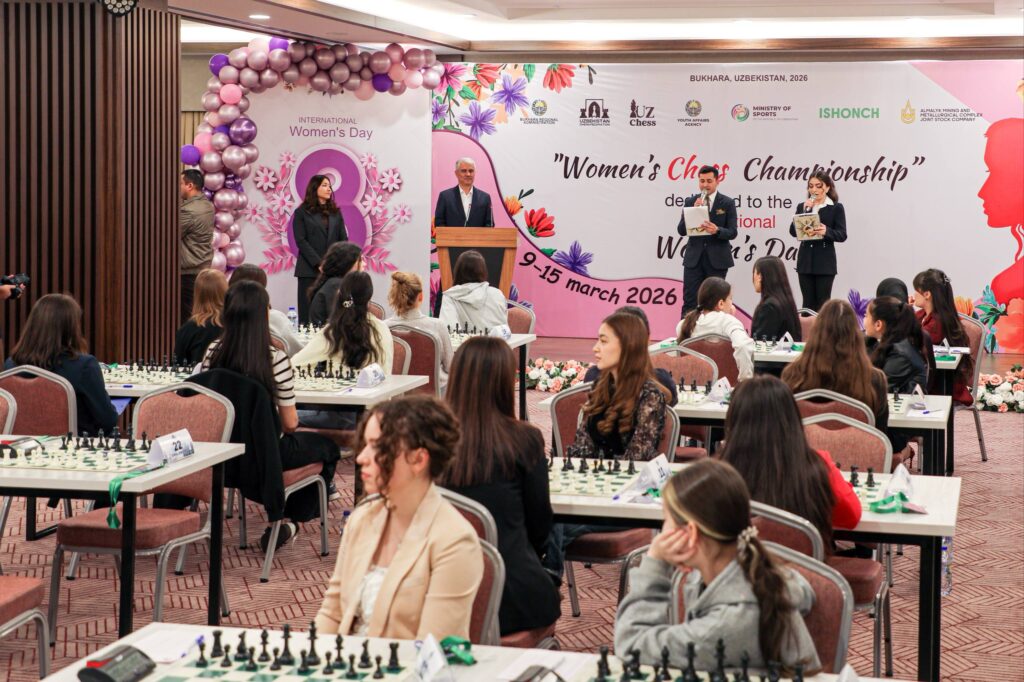
Photo by the Chess Federation of Uzbekistan.
Once a key node of the Great Silk Road, the beautiful city of Bukhara today witnessed the start of a current-traditional women’s chess festival – arguably one of the strongest in the world. This is the fourth edition of the tournament. Previously, victory was claimed by Polish Grandmaster Alicja Sliwicka, followed by Anna Shukhman in the second place (who earlier had won the World U20 Championship), while Polina Shuvalova took the bronze medal. I participated as well back then and although didn’t achieve much success on the board, I left with the best possible impressions of the organization and Uzbekistan itself. The 2024 tournament – the second in the series – was won by Anastasia Bodnaruk, while the very first edition was won by Valentina Gunina with Bodnaruk finishing third.
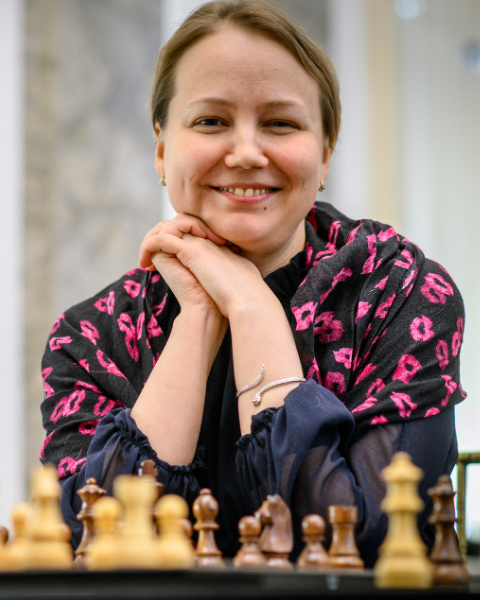
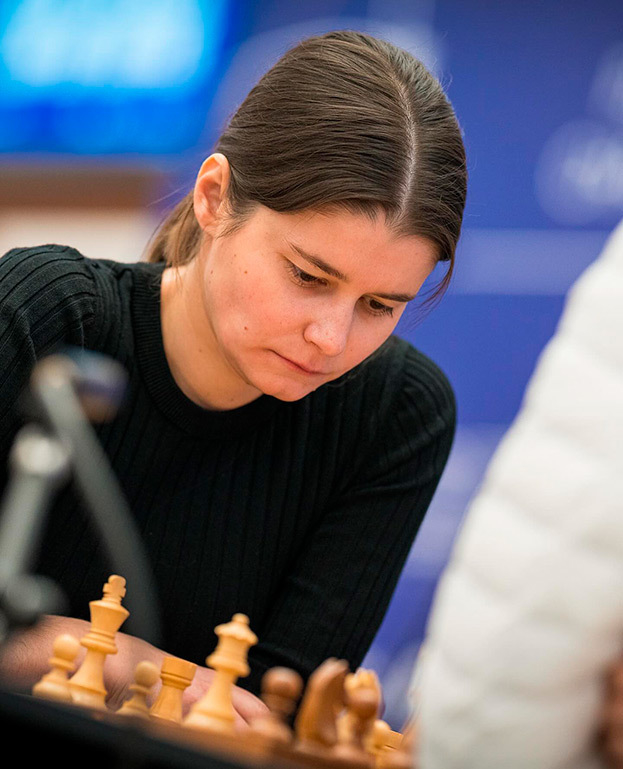

Chess in Uzbekistan has been on a massive rise in recent years. This applies not only to the men (who doesn’t know the names of the Rapid World Champion Nodirbek, who is currently crushing tournament after tournament or the World Cup winner Javokhir?), but to the women as well. Afruza Khamdamova is shining bright, having just won the women’s section at the Aeroflot Open and Gulrukhbegim Tokhirjonova has returned from the USA (notably, both are playing in the “Masters” tournament this year). New young stars are emerging. Meanwhile, female chess players from all over the world gather in Uzbekistan every year in early March to compete for an impressive prize fund – this time totaling $70,000.
The venue of the tournament changes constantly. The first two were held in Tashkent, the third in Samarkand and the fourth is now in Bukhara. Where should we expect the next one – perhaps in Khiva?
This year the organizers decided to slightly change the format. While previously there were two tournaments – the “A” title event for the main prize fund and the “B” amateur event – they have now been renamed “Challengers” and “Futures.” Additionally a “Masters” round-tornament has been added – a true super-tournament with an average rating above 2400. The starting rank list is headed by WGM Stavroula Tsolakidou, GM Nana Dzagnidze and GM Harika Dronavalli. Two Russians are also competing: IM Leya Garifullina and GM Olga Girya.



The “Challengers” tournament also boasts a prestigious lineup: only 8 out of the 41 players do not hold international titles. The top seed is IM Olga Badelka, a player of Belarusian origin who played for Russia for some time and now represents Austria. She is followed by two Russians: WGM Ekaterina Goltseva and IM Anastasia Bodnaruk. In total, there are 12 of our female compatriots in the tournament, including WFM Anna Zhurova, WIM Diana Khafizova, WFM Maria Pershina (formerly Yakimova), WGM Yana Zhapova, WIM Olga Karmanova, WIM Maria Komyagina, WFM Alena Volchkova, WFM Olesya Vlasova and WCM Regina Galimova.
The time control has also changed – we are playing “fast classic,” a format rapidly coming into fashion: one hour for the game with a 30-second increment per move. Consequently, the schedule is rigorous with two rounds every day except for the final one.
As always, everything is organized at the highest level. The playing hall is located in the Wyndham Bukhara Hotel, close to the Old City. Everyone is strictly screened by metal detectors at the entrance. In a specially designated lounge participants can have tea, coffee and light snacks during their games. TV crews are on-site and before the start of the round, several players gave mini-interviews (I was lucky enough to be among them).

Photo by the Chess Federation of Uzbekistan.
There were no major sensations in the first round. In the “Masters,” Nana Dzagnidze defeated Harika Dronavalli, Ulviyya Fataliyeva beat Gulrukhbegim Tokhirjonova and Umida Omonova outplayed the more experienced Yuliia Osmak. Leya Garifullina drew with Afruza Khamdamova, as did Stavroula Tsolakidou with Olga Girya. In the Challengers , two players from the top half of the starting list suffered defeats in the opening round – Maria Pershina and Maria Komyagina. Five other favorites drew their games.
The second round in the main tournament was also a hard-fought affair. In an Uzbek derby, Afruza Khamdamova defeated Gulrukhbegim Tokhirjonova, Nana Dzagnidze beat Stavroula Tsolakidou, and Harika Dronavalli proved stronger than Leya Garifullina. Draws were played out between Umida Omonova and Ulviyya Fataliyeva, as well as between Olga Girya and Yulija Osmak. After two rounds, a sole leader has emerged – Nana Dzagnidze holds a perfect score with three players in close pursuit.
In the Challengers, the second round proved much more difficult for the favorites. While the rating gap between opponents in the first round was quite large, the titled players have now begun to clash with one another. Suffice it to say that the games on the top ten boards ended with a score of 5,5-4,5 in favor of the rating outsiders. Olga Badelka, Anastasia Bodnaruk, Lala Shokhradova and Veranika Abramkina all maintain 2 out of 2 record.